Meet TS and Come See the Rest of the Garden...

Thursday, April 19, 2012

The Long and Short of It

I don't know about you, but for me the new gardening year starts in spring when everything begins to bloom and ends when my garden goes dormant in late fall. This year I've decided to show more of the entire garden and various beds in my posts to help balance out the occasional macro shot. This allows the reader to appreciate the details of the plant while also seeing how it's used in the garden. This also means I can't hide any mistakes or crop out plants that are less than fabulous to preserve my dignity. But that's ok. Considering I once got up at a drag queen brunch and danced with one of the queens, I'm not that dignified to begin with.

Here are a few things you should know about me before I begin this new theme:

1. I'm not a landscape designer, landscape architect, horticulturalist, or botanist. I'm a slightly crazy science teacher who spends all day with 12 year olds.

2. I'm not independently wealthy, a fact I find highly irritating. My gardening decisions are often made based on cost and practicality. I view compost, mulch, and organic soil amendments as investments since healthy soil creates healthy plants. But it means I have to cut corners in other areas. I often use seedlings and bare root plants to populate my beds.

3. I have a very basic, cheap camera and virtually no photography skills. However, I make incredible cookies and can run in heels. Whenever I take a great picture, I'm shocked and thrilled. The best part about my camera is the anti-jiggle setting. It's always on.

4. My photography goals are: don't take a picture of your finger or a pooping dog. I have recently stopped taking videos of the interior of my purse and pockets. I'm very proud.

5.  I have a doctorate from the University of Trial and Error.

6. When I talk to myself in my head, I sometimes talk like a pirate.


'Susanna Mitchell' marguerites (Anthemis) are one of my favorite flowers. I love how simple they are.


They need sharp drainage, full sun, and very little fertilizer. They thrive in my container garden. 


I've spent the last 15 years using cheap plastic containers which always overheat and fry the roots of my plants. This year I splurged and bought glazed clay containers. The last empty pot is the future home of an Abraham Darby rose. I doubt it will live in the pot forever since they get so big. The back garden and the entrances to the dog run are in the background.


This view shows the newest perennial bed and the dry stream bed I dug through the middle. I'm still in the process of planting and mulching that bed. The beginnings of my NanoFarm, along with plants set aside for friends, are at the end of the patio. I'll be growing tomatoes, ground cherries, carrots, and sweet potatoes. The blue and yellow balls are bird houses.


Silene 'Rolly's Favorite' is one of my earliest spring bloomers. It thrives in dry soil with sharp drainage.


The silene grows next to a dwarf white catmint that blooms with the daffodils. A native white penstemon, agastache, knautia, alliums, and sedum grow nearby. Orange milkweed and blue mist flower are just beginning to push up.


 This bed is near one of the entrances to the dog run. A huge Westerland climbing rose grows along the fence.


  Geums


Geums thrive in one of the few moist spots in my garden. 


They clash shamelessly with the 'Pink Champagne' clematis but so what? I love how exuberantly each plant grows in its spot and see no point in moving them. Monarda, yellow geums, and caryopteris (blue mist shrub) grow nearby.


Pink bigroot geranium 


Bigroot geraniums make an excellent ground cover for partial shade. They're putting the squeeze on my purple euphorbia and have plans to invade the campanula and phlox in the neighboring bed. Fortunately for the other plants, they're easy to control.


This bed is full of campanula, phlox, black eyed susans (rudbeckia), staychys 'Hummelo', native mountain mint, 'Etoille Violet clematis' and a 'River Mist' sea oats.


'River Mist' sea oats


A stand of Japanese anemones grows near the variegated sea oats but thanks to a dry spring, they've been slow to emerge. Thornless blackberries grow along the back fence near the crepe myrtle.  


Another pink clematis I can't remember the name of!


Clematis and False Solomon's Seal


Two different pink clematis grow along the fence I share with my neighbor. The second clematis begins blooming when the dark pink one finishes. I didn't plan it that way. I just got lucky. False Solomon's Seal, daylilies, amsonia, blue asters, and tall veronica grow nearby. It's hard to see in this picture but two dwarf lespedeza plants are just leafing out. The cheddar pinks (dianthus) at the bottom are headed for a spot near the knautia (growing along the iron fence) since they're too close to the grass. A big red brick holds down the daffodil foliage so it doesn't suffocate the veronica. 

Sunday, April 15, 2012

Welcome to Today

After the warmest March on record we're having the driest April I can remember and my garden is thirsty. But I love today, anyway. The skies are clear, I saw a frog in my frog pond, and after a deep soaking, my plants are happy. So am I!

For this post I'm showing the plants two ways: up close to enjoy the details and from a short distance to show how they are used in the garden.


Native green and gold (Chrysoganum) is an excellent ground cover for dry shade.


It grows under columbine at the edge of the patio. I just planted it last fall so it's still small.


Columbine 
 I just love how only one flower is pink while the rest are purple.


'The President' clematis has recovered from wilt and is feeling much better.


'The President' clematis


The bleeding heart continues its outward sprawl and has started its annual invasion of the heuchera.

Wood anemonies grow between the sarcocca and the bleeding heart.


Rutgers hybrid 'Stellar Pink' dogwood


More daffodils have pushed up and begun to bloom.


Lucy watches the neighborhood through a window flanked by 'Miss Kim' lilacs and a massive viburnum trilobum.


American Cranberry bush (Viburnum trilobum) has white lace cap flowers in the spring and fabulous fall foliage.


This picture isn't the greatest! The viburnum was planted way too close to the house (oops!) and is underplanted with yellowroot. A 'Miss Kim' lilac grows to the right. I recently added two rows of fragrant day lilies to the area in front of the lilac.


Southeastern native clematis crispa grows along the fence.


It's flowers remind me of an octopus!


False Solomon's Seal (Polygonatum) is my new favorite plant!


I added it to several areas of the garden including the Bed of Death and Misery. I redesigned this bed last fall and I'm hoping it will earn a new nickname!


False Solomon's Seal, aster ericoides, variegated sedum, northern sea oats grass (very back), coreopsis 'Sunshine Superman' (self-seeded), chives, chrysoganum, and amsonia fill out the new design. Blue stem solidago grows to the back right.


Hosta I can't remember the name of.


 The river birch garden


Cowslip primroses - one of my favorite spring flowers.


Cowlsip and self-seeded wood poppies grow near a dwarf sweetspire 'Little Henry'. Everybody, including the dogs, kept using this area as a short cut so I added a stepping stone to eliminate plant damage.

Wednesday, April 11, 2012

Almost Wordless Wednesday: Clematis on a Blustery Day

A pink mystery clematis grows around a metal watering can bird house under the shade of a Prague viburnum. 


Saturday, April 7, 2012

Project Updates: Seeds, Frog Ponds, and Bulbapalooza

I've realized recently that I love being in the middle of a project. I love the finished result even more, provided the project actually comes out the way I want it to. But I love the creative process and problem solving that comes with it almost as much. Here is an update on two projects I started a few months ago as well as the frog pond I created last fall.


Project: I decided this winter to set up my own mini-greenhouse on my kitchen counter and grow a few plants from seed. Salpiglosis, a beautiful annual that sounds like a diseased body part and ground cherries were on the menu. I started two small trays of seeds using traditional fiber pellets and two trays using a product called No Damp Off.


Since I'm home this week on Spring Break I've been taking the seedlings outside for the natural light and to start hardening them off. These are zinnia seedlings.


The ground cherry seedlings are still tiny but I have ten sturdy seedlings so I'm hopeful I'll have enough plants to keep me well supplied. I'll pass the extras on to friends and other gardeners.

Results: The No Damp Off was hard to keep watered and the plants grew weird. If I had watered it with a spray bottle every day, however, it might have worked better. They also germinated slower than the seeds in the fiber pellets. I ended up giving all the No Damp Off and the seeds to my worms and planted zinnias in the extra trays. The salpiglosis seeds needed darkness to germinate but must have germinated before I realized it because they grew tall and skinny. Worm food! The ground cherry seeds planted in the fiber pellets are growing well, even though they're still tiny. I read they don't like cool weather and will put out more growth once it warms up.


I put Texas Tufa's advice to good use and put up foil between the grow lights to reflect as much light back on to the seedlings as possible. It works really well!

Was It Worth It? Yes! Now I don't have to wait until July for my zinnias to bloom and will hopefully have ground cherry plants this summer. Plus, I get to start my day checking on my seed trays while drinking my morning vat of coffee.


Project: I planted 260 discount daffodils and Dutch iris in January, thanks to a ridiculously warm winter. I extended the width of my front garden beds by three feet to accommodate the bulbs and my ongoing redesign of the front landscaping. I'm planning on filling the bed with annual vinca this summer.

Results: Some of the bulbs are up, but not all of them. Those that don't come up this spring will hopefully come up next spring. A few of the daffodils are blooming and more are pushing up every day. Now that we're almost past daffodil season, I love the surprise of unexpected blooms.


There are still a lot of daffodils pushing foliage up through the soil. Purple Dutch iris are interplanted with the daffs. Naked lady lilies are planted at the very end of the bed near the lamp post.


Was It Worth It? Yes!! Even though the bed definitely doesn't look the way I had imagined it last January, I'm confident it will be bursting with bloom next spring. The work is done and I have years of enjoyment ahead of me. Plus, it was incredible to get to work in the garden in January!!


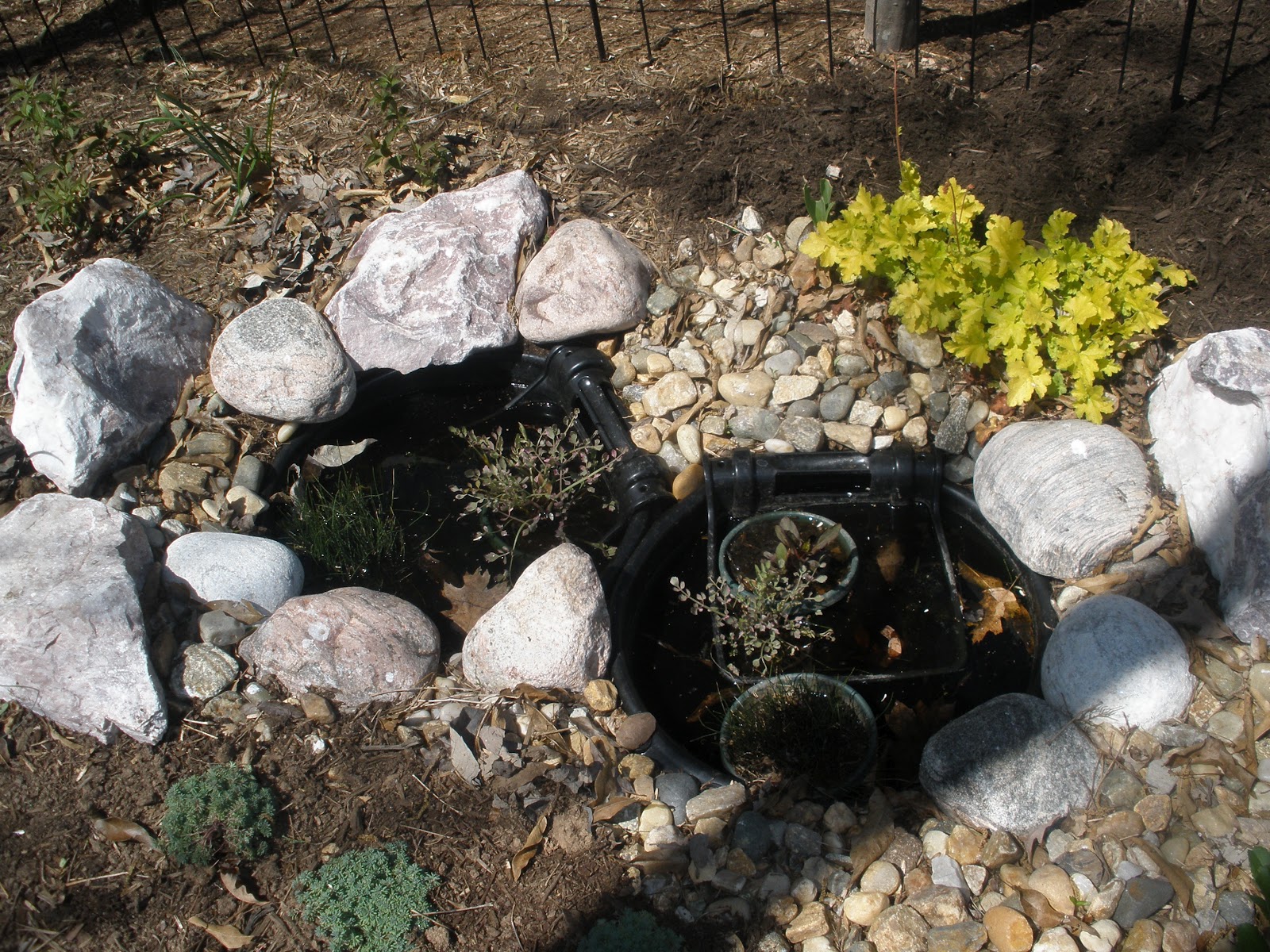
Project: I really wanted a pond in my garden but didn't have access to an electrical hookup to power a pump. I considered a container pond but didn't have a way to winterize the container and didn't want to risk cracking  an expensive ceramic pot with our usual winter weather. The solution was to sink a container into the ground and create a tiny in-ground pond. It was also exponentially cheaper than a regular pond. I bought muck buckets and feed scoops at a farm store, dug a big hole, lined the hole with carpet squares, and stuck in the buckets. I submerged bricks into the pond and added potted plants that would grow to cover the edges of the buckets. My goal was to attract frogs to the garden and grow aquatic plants.


Variegated water celery, dwarf horse rush, and a 'Fried Green Tomatoes' lobelia live in the frog pond. I'm hoping the water celery will spread to the point that it covers some of the edges of the muck buckets. Feed scoops hang over the edge of the buckets and provide a 'shallow end' for the frogs. This summer I'm going to float tiny balls of barley in the water to help control algae. Hornwort lives submerged in the water to keep it oxygenated.

Result: The pond and the plants all made it through the winter. Yay! A friend who lives close by brought over a bunch of  frogs that have been hiding a lot but making enough guest appearances that I think they're still in the pond. I also added mosquito fish that I think may have been eaten by the frogs. On the advice of one of the plant specialists at our local garden center, I added guppies to the pond to eat the mosquito larvae. Guppies get along well with frogs and won't go after tadpoles. But between our low night temperatures and several blackbirds who have been using the pond as their own personal fishing hole, I think the guppies have been eaten or froze. The pond is definitely a work in progress.


A chartreuse heuchera brightens up the edges of the pond. It survived total neglect in a pot last summer and I needed to find a spot for it in the garden so I stuck it between the rocks and soil at the edge of the garden bed near the dog run. I'm not sure the name of this cultivar, possibly 'Lime Rickey' but it's tough as nails!!  When I was filling in the hole around the buckets, I created areas for the frogs and toads to hibernate under the ground cover sedum and heuchera.

Was It Worth It? Yes!!  I love having aquatic plants in the garden and can add more guppies when it warms up. When the water is warmer they'll be faster and better able to evade the blackbirds. I was really excited to see the native leopard frogs peeking out the water and sunbathing on the rocks. I turned the driest, most inhospitable spot in my garden into a teensy frog pond. Even the little birds like to hop around its edges. I love it!

Tuesday, April 3, 2012

Almost Wordless Wednesday: Weirdness


Last fall I dug these salvia 'Maraschino' out of the garden and plopped them in a pot to brighten up my patio. I had planned on repotting them this week while I'm on spring break. When I came outside on Monday, they were blooming! In April!!

Sunday, April 1, 2012

The Case of the Collapsing Clematis

Victim: Clematis 'The President'
Crime: Isolated stems that have collapsed for no apparent reason
Clues: Droopy stems, weird buds, and few unusually skinny leaves
Attempted Solutions: Copper fungicide, cutting stems back, cussing
Suspects: Radioactive space weasels, freakish March weather, clematis wilt, damaged stems


This picture was taken last May 2011. The clematis grows near a Japanese holly in the front garden.


Abut a month ago I untangled the knot of clematis stems at the base and adjusted the soaker hose. I cut out quite a bit of dead wood. I should have taken a picture, but I forgot.


Maybe the main problem is that I expect it to look the way it does in May even though it's only April.


 Several stems have begun to wilt while the rest of the vine looks fine.


I cut the affected stems back to the ground.


It's really scrawny right now and I can't remember if it was this scrawny last April. I think I need more sleep! I pulled it out of the hollies and trained up a trellis. 


I sprayed it with a copper fungicide in case it's clematis wilt. A crazy mosaic pot I made last year is in the background.


There's something rather alien about this bud. I'm keeping a close, but not too close, eye on it.


These leaves are like supermodels - way too skinny!

I need you to help me solve this case! Whaddya think the problem is??